
The generous gift of the Archiginnasio Library of Bologna
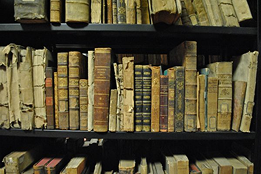
The Bologna Municipal Library, founded in 1801, collects the library holdings of religious congregations dissolved by the measures of the Napoleonic period (1797-1798) and the Kingdom of Italy (1866). The new Library, first housed at the Convent of San Domenico, was moved to the Archiginnasio Palace in 1838, where the material was organized by subject and placed in the ancient classrooms of the Studio by librarian Luigi Frati (1853-1902). Precisely because of the great work of reorganization and revision done by Frati, the Archiginnasio was able to send to Turin a substantial number of duplicate volumes from suppressed institutions and various donors. A good number of the volumes that arrived in Turin bear a card inside with an indication of the work and in red the attribution of the perusal carried out by Frati; in addition, in many cases stamps and possession notes of previous owners appear on the title pages. It was therefore possible to identify the following provenances: Biblioteca Comunitativa (the name of the present Archiginnasio attested between 1802 and 1807); some suppressed Spoleto convents (San Filippo Neri, Capuchins, St. Paul’s, and Society of Jesus); some religious institutions in Bologna (St. Dominic, St. Paul’s, St. Anne’s, and St. Bartholomew’s); St. Mary of Abrenunzio convent; and Capuchins of San Borgo. Also of particular importance is the collection of Antonio Magnani (1743-1811), Jesuit, collector, scholar, professor in Verona and Bologna, and librarian of the Institute of Sciences, who upon his death donated his book collection to the City of Bologna so that a new public library could be established), thus forming the first nucleus of the Archiginnasio library. Another particularly notable donor was Francesco Zambeccari (1682-1767), primicerius of San Petronio and domestic prelate of Pope Benedict XIV, who in 1744 donated his volumes to the library of the Jesuit College of Santa Lucia. Lastly, a large group of volumes that arrived in Turin bears possession notes or ex libris from donors that are not currently attested among the provenances of the Archiginnasio, which, however, retain within them the perusal card that traces their sure Bolognese provenance. These are, for example, Fabrizio Alberto, Giuseppe Garampii, Giuseppe Berian, Luigi Gattinara, and Antonio Francesco De Valenti, but especially a member of the Zondadari family, who was a bishop and lived around 1790, whose 215 volumes have come to the National Library, and whose ex libris is also found on a volume in the Biblioteca Marciana in Venice. The complexity of the formation of the Archiginnasio Library-and by reflection of the donation that came to the National Library-is well evident in the difficulty of reading the marks of ancient provenances and owners on the volumes and providing a correct interpretation.